
Gen Z-led protest movements are building on a long legacy of struggle against economic inequality.
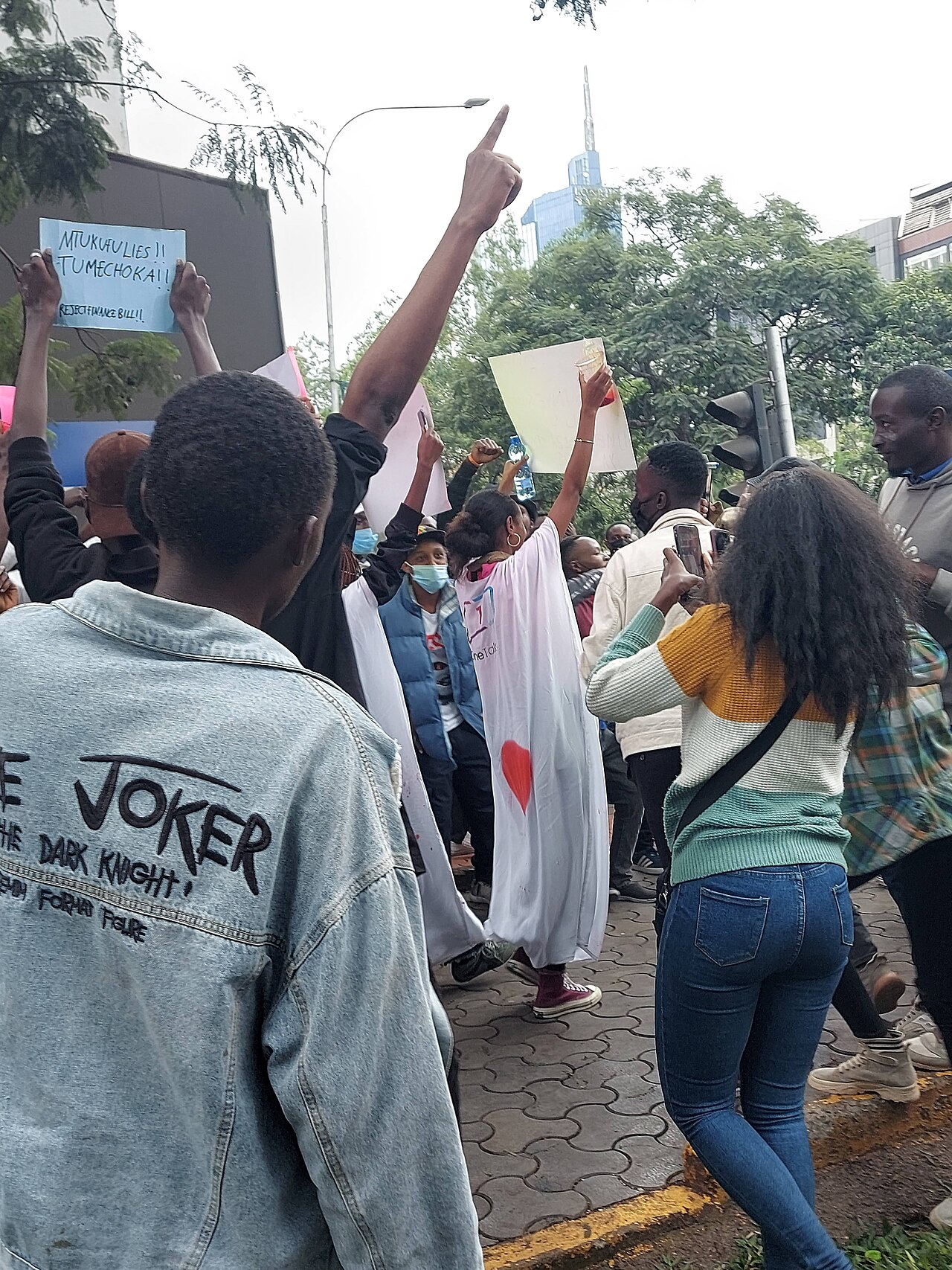
As we mark 15 years since Occupy Wall Street, it is worth remembering that the movement against inequality has a long lineage. The Gen Z-led protests flooding the streets of India, Kenya, Bolivia, and Tunisia today have been building for generations.
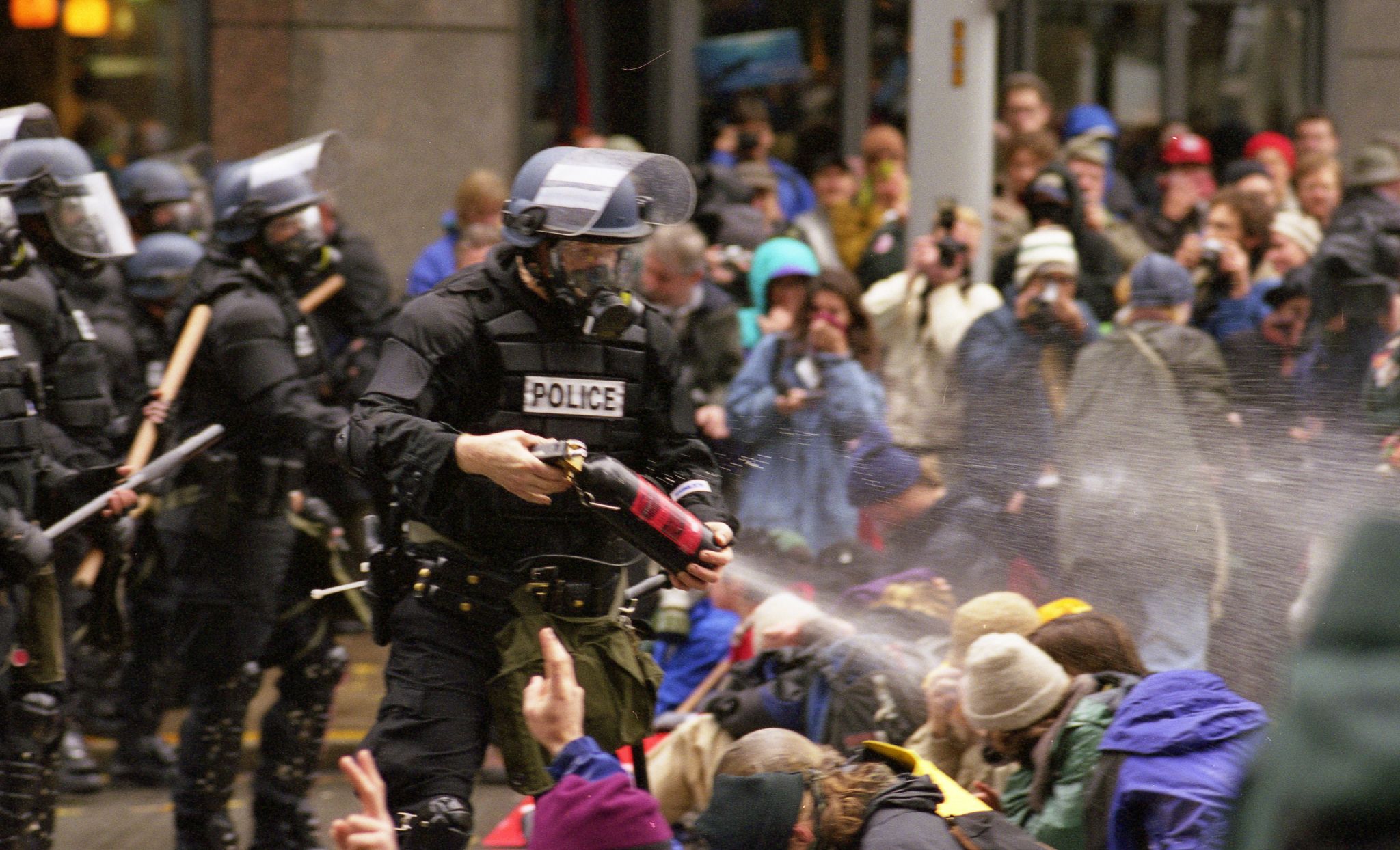
On the last day of November 1999, tens of thousands of people shut down the World Trade Organization summit in Seattle. Trade unionists marched alongside environmentalists, students locked arms with farmers, and for a few extraordinary days the people who run the global economy could not get into their own meeting.
The press called protesters a rabble with no coherent demand. They were wrong. The demand was simple and it has not changed: an economy that works for the many, not for a handful at the top.
That demand lands differently when you cannot afford the basics of life. In Seattle, the debate centred on trade rules. Today, people are doing the maths as they stand in front of a grocery food shop not knowing what they can afford to buy, tackle rents that consume the entire salary, and face energy bills that arrive like a threat. What was once an abstraction has become a household emergency.
Seattle did not come from nowhere. Five years earlier, the Zapatistas had risen in Southern Mexico on the day a free trade deal took effect, declaring that ordinary people had a right to refuse the terms being set for them from above.
The Jubilee movement had brought millions of people onto the streets and into churches to demand the cancellation of crushing debts owed by the world’s poorest countries.
By 2001 a hundred thousand people were meeting in Porto Alegre in Brazil under the banner “another world is possible,” and that same year a young man named Carlo Giuliani was shot dead protesting the G8 in Genoa, Italy.
The powerful learned early that this movement would not simply ask politely. It would demand systemic change.
Then came the crash. In 2008, the same financial system that had been sold to us as untouchable collapsed, and ordinary people were handed the bill while the bankers who broke it kept their bonuses. Out of that betrayal came the next great wave of action.
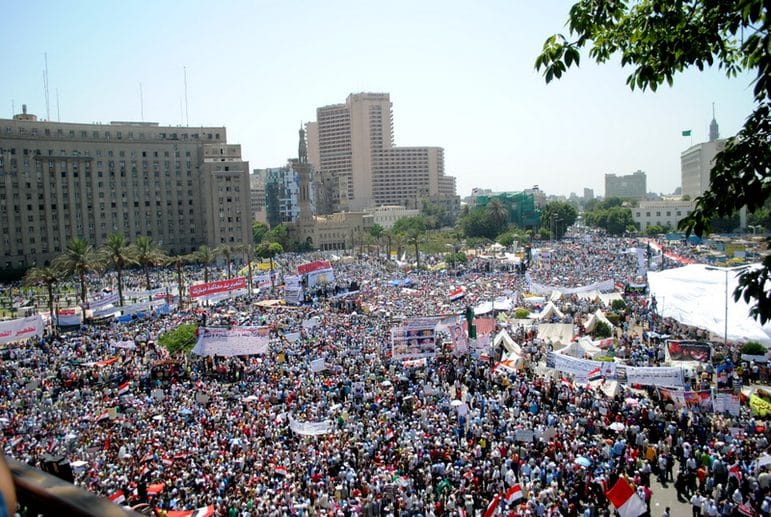
2011 brought Tahrir Square, the Spanish Indignados, the Greek fight against austerity, the Chilean students, and, in September, a small camp in the shadow of Wall Street.
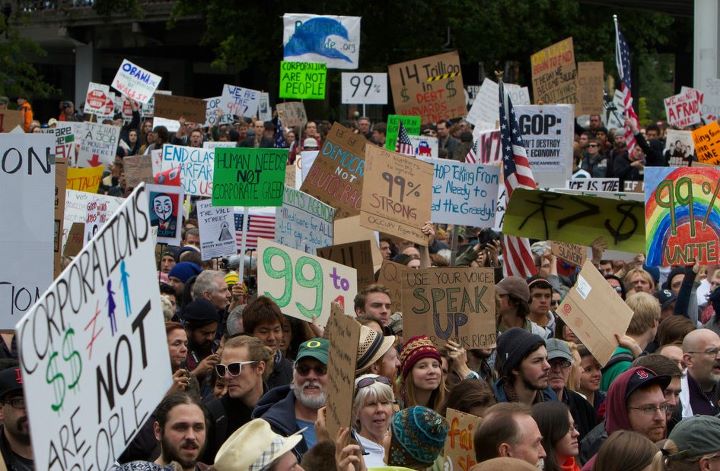
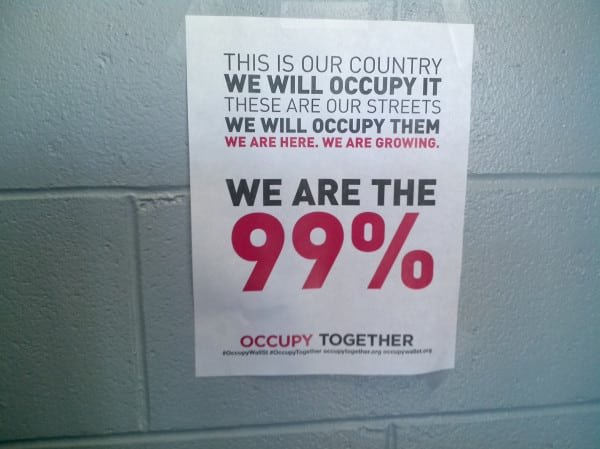
The Occupy Wall Street movement gave the whole movement its slogan – “We are the 99%.” A single phrase that did what a thousand policy papers could not. The protesters drew the line. There is them, and there is the rest of us, and the rest of us are almost everyone.
Occupy’s camp was eventually cleared. Critics declared the moment over, the movement a failure, the slogan a fad. Look closer and you see something different.
The idea did not die. It moved into the bloodstream of public life. The language of the 1% vs the 99% is now spoken in parliaments and kitchens alike. Ideas once dismissed as fringe – taxing extreme wealth, cancelling illegitimate debt, treating billionaires as a policy problem rather than a national mascot – are now argued seriously by economists and demanded openly in the streets.
That is what a movement can do over time. Shift what people believe is normal, and then shift what they believe is possible.
We need that long memory now, because the case against the system has never been clearer. According to Oxfam, billionaire wealth hit a record $18.3 trillion in 2025, growing three times faster than in the previous five years, while the number of billionaires surpassed 3,000 for the first time in history. The richest 1% now own almost 44 percent of all the world’s wealth, while the poorest half of humanity holds barely half of one percent of all the world’s wealth.
Just 12 men hold more wealth than four billion people combined. Elon Musk recently became the first person in history to be worth a trillion dollars, in a world where one in four people goes hungry. This is not the weather. It is a result of a system, engineered by people with names and addresses who have rigged the rules in their own favor.
The other side of that ledger is the bill the rest of us pay. The same years that added a trillion to the top produced rents nobody can pay and food prices that climb faster than wages.
The 1%’s record wealth and the 99%’s rising cost of living are not two distinct stories. They are one transaction, and we are on the paying end of it. In the United States, rents across major cities have risen by more than a third since 2020, the cost of living now tops the list of voters’ concerns, and in 2025 Zohran Mamdani became mayor on an affordability platform in the very city where Occupy began.
And the wealthy know they are exposed, which is why they are buying protection. The super-rich are now 4,000 times more likely to hold political office than the rest of us, and they have spent freely to capture the media, the courts, and the politics that might otherwise hold them to account. When wealth concentrates like this, democracy thins out. The fight against inequality and the fight for democracy are the same fight.
Here is the lesson of the last decades, and the reason for hope: Every time the powerful have declared this movement finished, it has returned larger, sharper, and more connected than before. Carnegie’s Global Protest Tracker recorded new anti-government protests in more than 70 countries in 2025.
The young people filling the streets today are not starting from zero. They stand on the shoulders of Seattle, Tahrir Square, Zuccotti Park, every square that was ever cleared, every campaign that was ever written off. And they are not marching over an abstraction. They are marching because the cost of a decent life has been priced out of reach while a few thousand people got richer than anyone in history.
So this one goes out to Gen Z, in every city and every country where the numbers no longer add up. Your time is now. You did not break this economy. You inherited the bill for it. Enough is enough.
The 1% have the money. We have the numbers, the history, and the truth. The only question that has ever mattered is whether we organize. Every generation before answered yes. Now it is yours to answer, and the world is waiting to hear it.
By Deepak Xavier and Janet Mudzviti-Zhou Co convenors – Fight Inequality Alliance
17 September 2026