
6 Reasons Big Oil Is Having a Great Year While You Ration Your Electricity
By Ed Pomfret
Read in: Spanish
The biggest oil companies on earth have just reported their profits for the last three months, and the numbers are staggering. They come from a spike in the price of oil, driven by wars in Iran and Ukraine, that pushed up the cost of filling a tank and heating a home. The same price rise that filled their accounts is the one that emptied yours.
While the industry dresses this up in press releases about resilience and discipline, here is the same story in plain English.
Your bills went up. Their profits went up. These are not two separate stories. They are the same money, moving between two pockets. You paid for the war at the pump and in your bills. They banked it. Here are six reasons that should make you angry enough to do something about it:
1. Record Profits, straight up
ExxonMobil posted $14.7bn in profit in three months, up from $8.8bn a year ago. Shell more than doubled its profit to $9.8bn, its best quarter in four years. Total's jumped 68% to $6bn. Chevron's roughly quadrupled to $12bn. These are among the biggest profits these companies have ever booked, and their bosses stood up and took a bow. Exxon's Darren Woods called the quarter "shaped by disruption, but defined by execution." Chevron's Mike Wirth said the company was "firing on all cylinders, which is good, because the world needs it" or to paraphrase it more simply: “we’re making money while destroying your climate”.
A good quarter for them is a number you cannot picture. A good quarter for you meant watching the meter tick over while you decided whether to boil the kettle.

2. They are not spending it on you
Here is the part that stings. When these companies make money, they do not lower your bill, and they do not, mostly, plough it into cheaper cleaner energy. They buy their own shares back.
A share buyback is a way of funnelling cash to shareholders by making each remaining share more valuable. This quarter alone, Exxon handed shareholders $9.4bn and Shell $5.2bn through buybacks and dividends. Shell has now announced at least $3bn of buybacks nineteen quarters in a row. That is not investment in the future. That is a company deciding it would rather reward the people who already own it than lower the price for the people who depend on it. The people at the top do fine too: Exxon boss Darren Woods was paid $33m last year, and Shell's Wael Sawan took home £13.8m, up nearly 60%. I know they’re not checking the electricity meter.
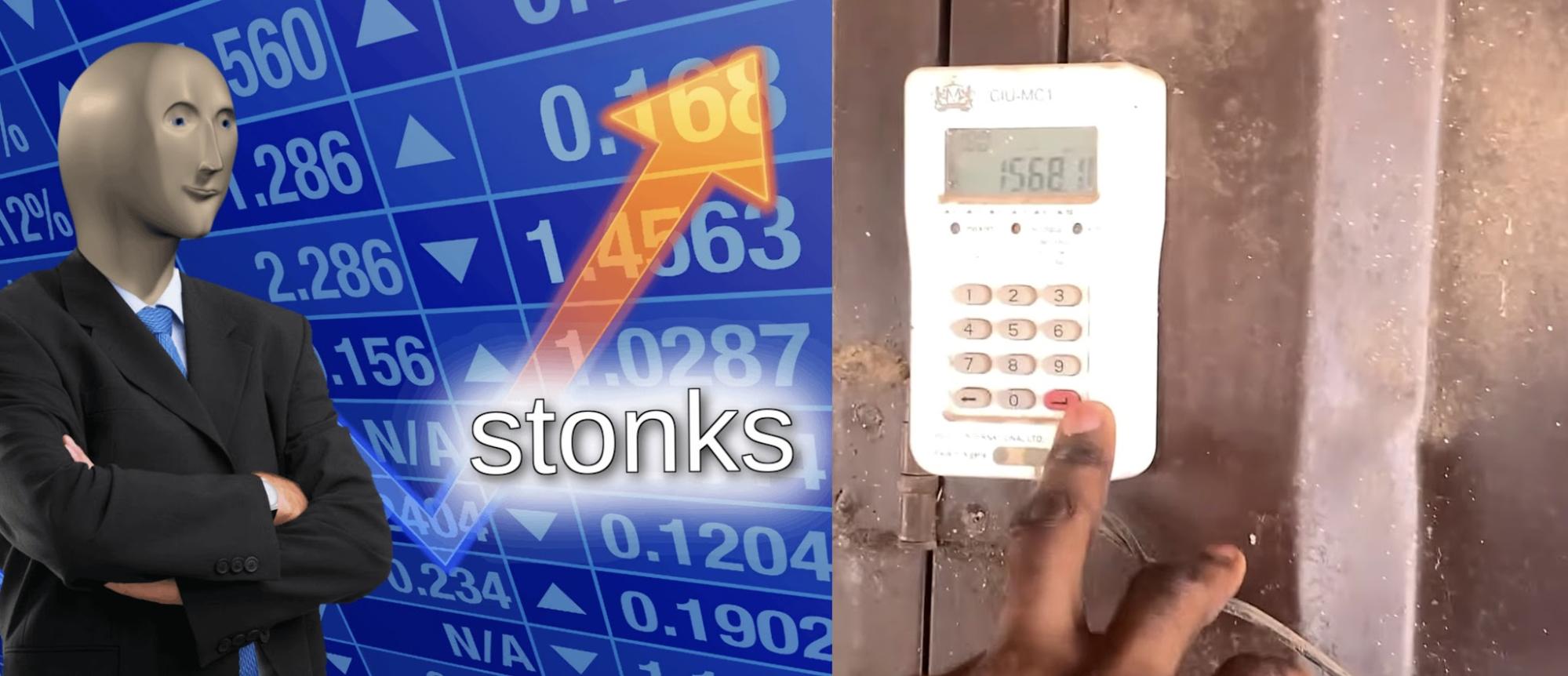
3. Every crisis is a payday
This is not a one-off. Every time a crisis pushes energy prices up, the same thing happens. Shell's best quarter before this one was 2022, when Russia's invasion of Ukraine sent prices soaring and households across the world were plunged into a cost of living crisis. Before that, every major price shock for decades. The pattern never changes: when the price of energy spikes, you absorb the hit and they collect the windfall. Their record quarters are a map of everyone else's worst years.
4. A chunk of your bill is just spent on gambling
Not all of your bill paid for drilling and shipping oil, a slice of it went to people betting on the price of a barrel. When traders pile into oil markets, they can push the price up well past what supply and demand alone would justify, and you pay the difference at the pump and on the meter. Even before this year's war premium, researchers looking at the 2020 to 2022 surge, the exact stretch when your cost of living started spiralling, estimated that speculation drove somewhere between a quarter and a half of the crude price rise, worth as much as $36 on a single barrel. The industry disputes that, which is exactly what you would expect from the people on the winning side of the bet.
5. There is an obvious fix, and it is already popular
Tax the profits. Properly, permanently, not as a one-off windfall gesture that expires before it bites. A serious tax on excess fossil fuel profits could fund the support that helps people through the ongoing cost of living crisis, the transition to energy that does not cook the planet, and public services that everyone relies on.
This is not a fringe idea. It is one of the most popular economic policies you can put in front of publics around the world, across the political spectrum. So why hasn't it happened?
6. The only reason it hasn't happened is who writes the rules
The answer is lobbying, on an industrial scale. In the first half of 2025, the US oil and gas industry spent around $240 million lobbying in Washington, more than half of what it spent in the whole of the previous year. In Brussels, the seven biggest fossil fuel companies and their networks racked up more than a thousand meetings with EU officials between 2019 and 2024. That is the machine standing between you and a fairer bill: a permanent, well-paid operation to keep the rules written in their favour. They will tell you high prices are just how markets work. They are not. This is a choice, and a few very rich people are paying good money to keep it that way.
So what do we do about it?
Their profits are a policy choice. So is stopping them. A tax on excess fossil fuel profits, one that puts money back into the pockets they emptied, is sitting right there waiting to be picked up. The only thing missing is enough people demanding it loudly enough to outweigh the lobbyists.
That is where you come in. Add your name to the demand for a tax on fossil fuel profits that funds a way out of this crisis instead of another round of buybacks: https://bit.ly/FIACL
They spent this quarter bragging to shareholders. Let's spend the rest of the year making sure it was their last easy one.
Ed Pomfret, Communications & media lead