World Social Justice Day: How Intersectionality Impacts Inequality
On World Social Justice Day, we are asked to imagine a fairer world but how do we do that when we live with colonial systems built to marginalize and control?
Written By Chanelle Beatrice
On World Social Justice Day, we are asked to imagine a fairer world but how do we do that when we live with colonial systems built to marginalize and control?
Fairness, equity, and equality cannot be imagined in the abstract, they must be grounded in reality, and backed by human rights centered policies, care, justice. As it stands the lived reality for billions is this: inequality, injustice, poverty – shaped by race, class, gender, sexuality, disability, migration status, and geography.
For LGBTQIA+ people around the world, injustice is not only about identity. It is about income. It is about housing. It is about access to healthcare. It is about who gets to live safely, and who is pushed into precarity. When discrimination intersects with economic exclusion, inequality does not simply add up. It rapidly multiplies – and the evidence is everywhere.
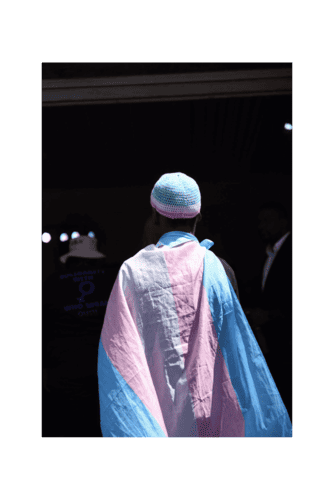
Across the globe, LGBTQIA+ people continue to face barriers in employment, housing, education, and healthcare. Trans and gender-diverse people experience disproportionately high unemployment and workplace discrimination. Queer youth are overrepresented among homeless populations, often as a result of family rejection and loss of jobs or even the inability to access education. Migrant LGBTQIA+ workers are pushed into precarious, underpaid sectors with little legal and social protection. When homophobia and transphobia intersect with racism, patriarchy, ableism, and xenophobia, the result is compounded economic vulnerability.
So how do we truly imagine a fairer and just world when so many communities are being pushed further to the margin? How do we achieve social justice for those giving up? What must be changed in policy and practice?
On this World Social Justice Day, we must be clear: there is no economic justice without LGBTQIA+ justice. And there is no LGBTQIA+ justice without dismantling economic systems that produce inequality.
So what does this really mean? Here’s some things I think are mandatory:
- Invest in universal public services – healthcare, education, housing, and social protection.
- Demand labor rights, especially for workers in informal and precarious sectors.
- Cancel illegitimate debt that drains public resources from Global South countries.
- Tax the super-rich and multinational corporations to fund people-centered economies.
- Listen to and invest in grassroots movements, including in queer-led movements that are building alternatives from the ground up.
Intersectionality demands that we center those at the sharpest edges of inequality; Black and Indigenous queer communities, trans and non-binary people, migrants, disabled LGBTQIA+ individuals, working-class communities. Social justice is not achieved when a few break through glass ceilings, it is achieved when scores of people are not forced to survive in the harshest ends of society. It is achieved when economies are designed not to extract, exclude, and exploit – but to care, protect, and sustain. It is achieved when leaders listen to us, #WeThe99.
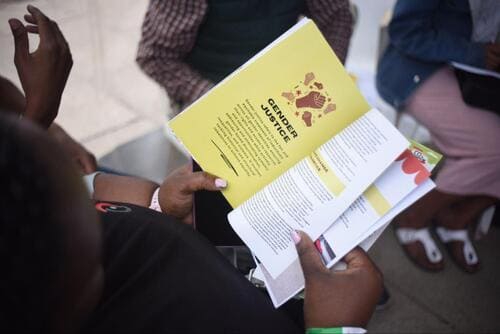
On this World Social Justice Day, we at Fight Inequality Alliance stand with LGBTQIA+ people around the world demanding not symbolic inclusion, but structural transformation through laws and policies that recognise and protect us. Inequality multiplies at the intersections, and so must our resistance. No one is free until we are all free!
Join our movement and demand a just future, demand a life filled with social justice.